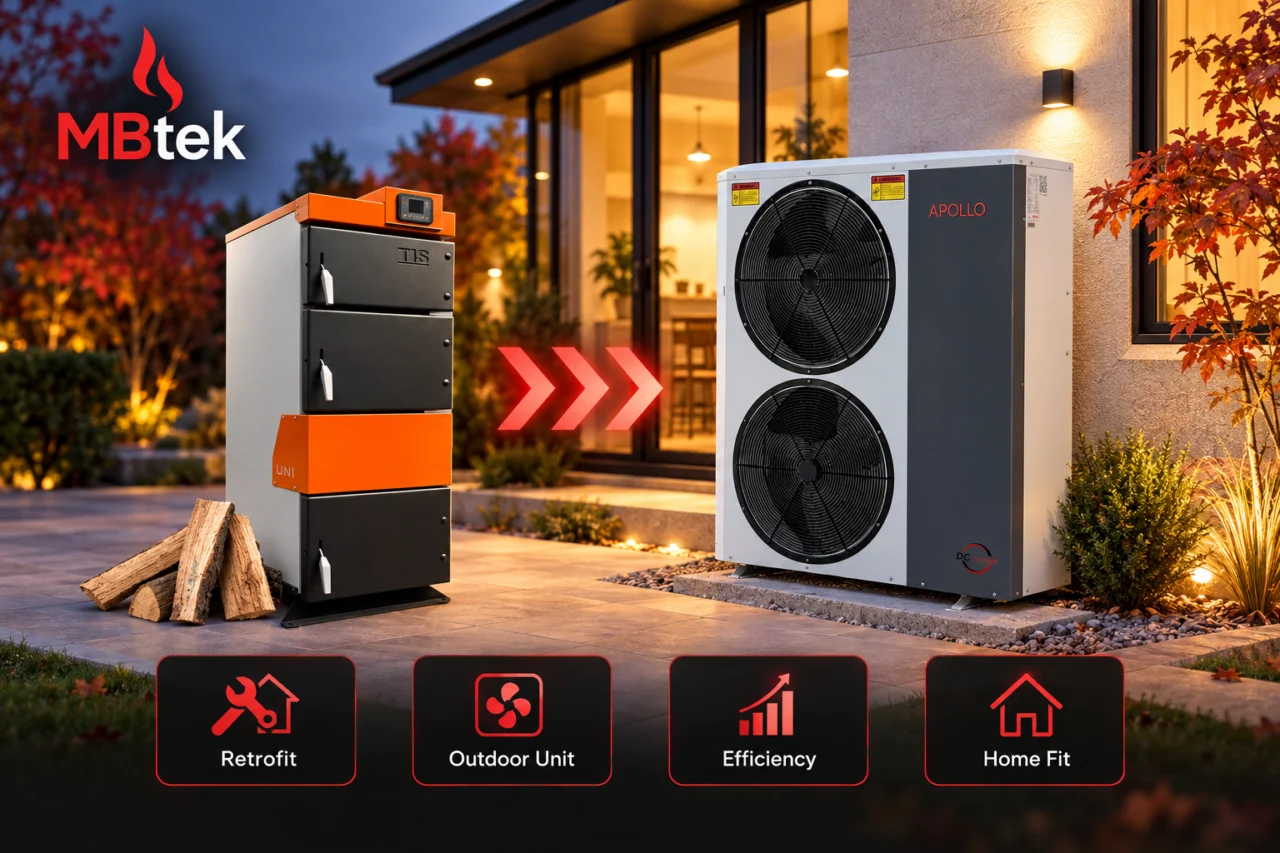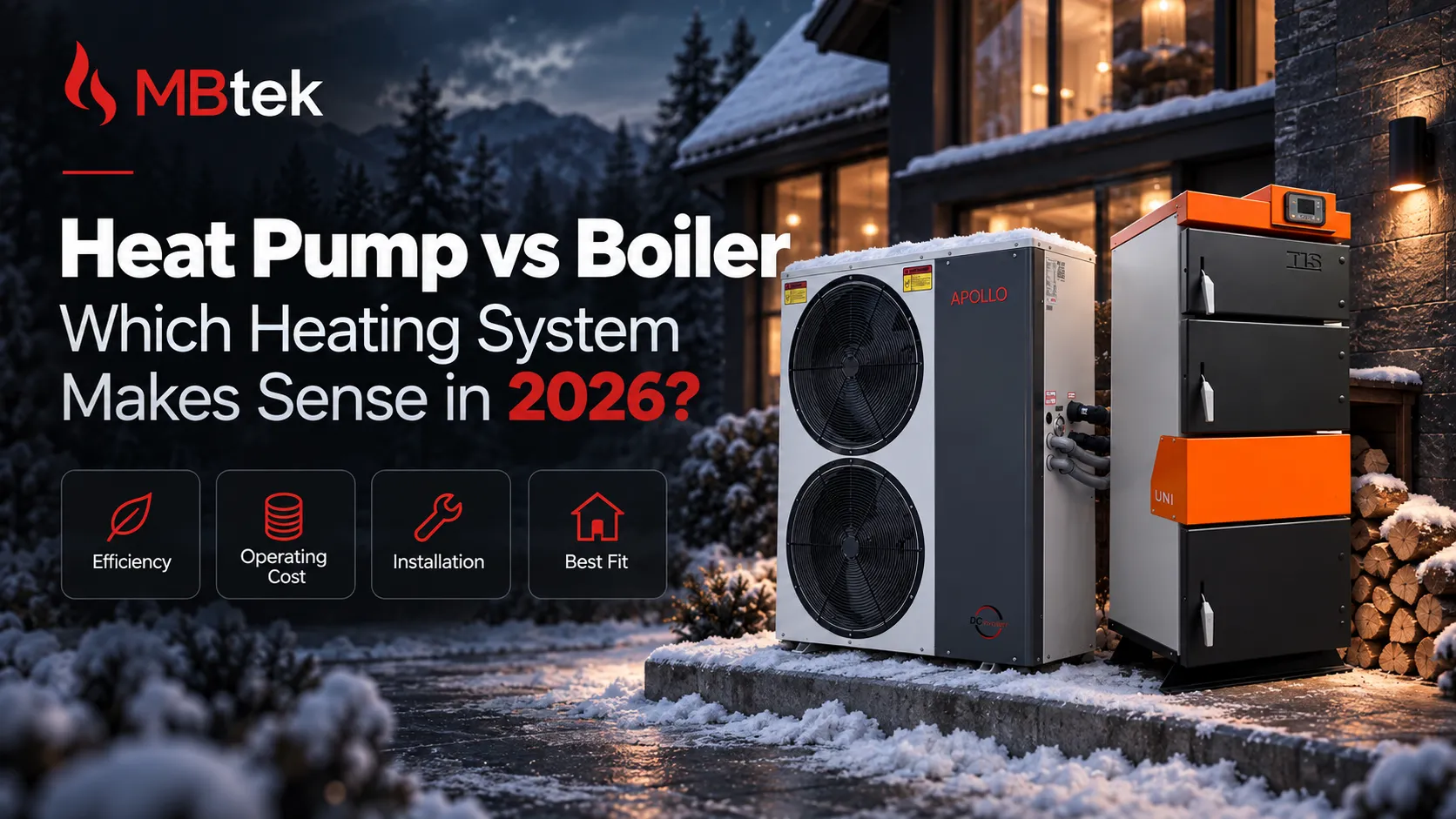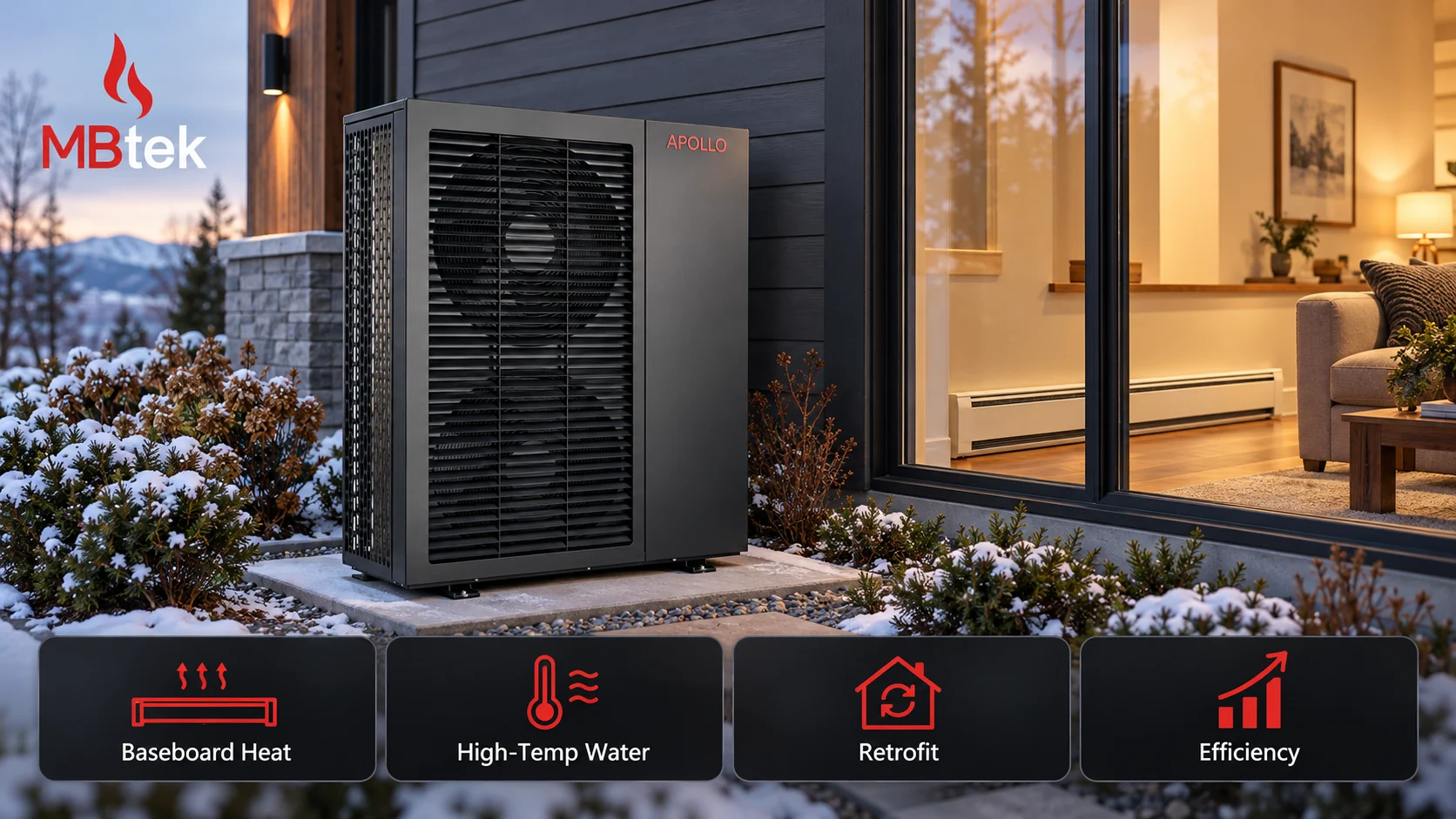
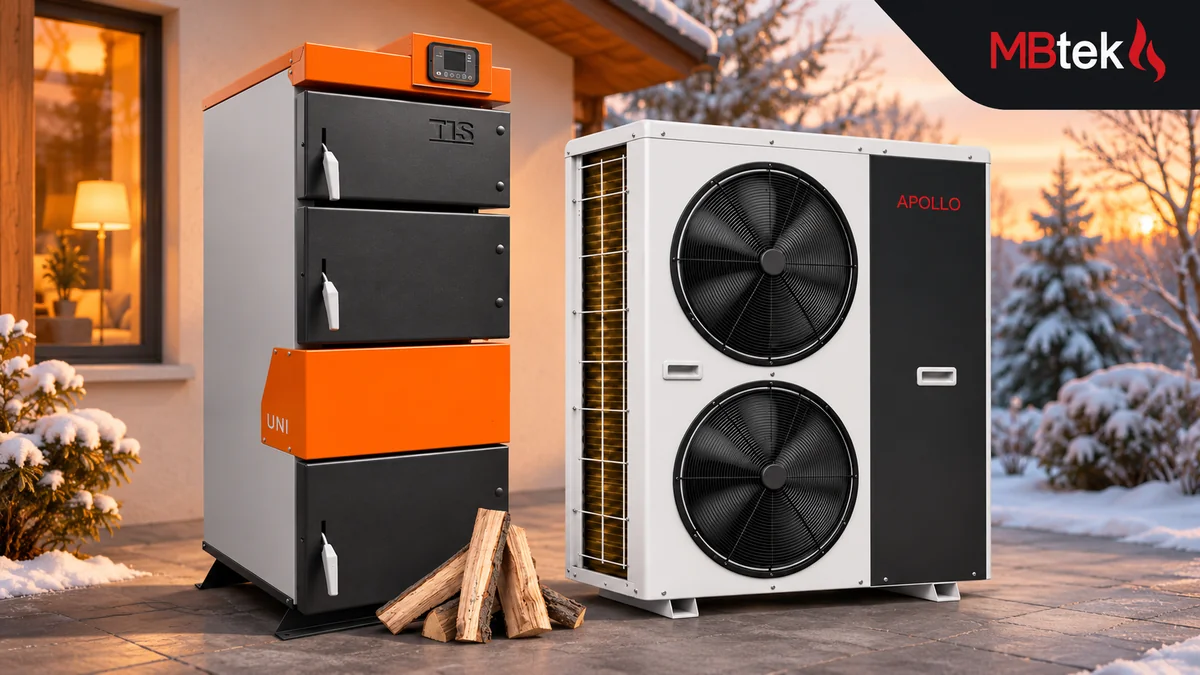
You can add an air-to-water heat pump to a hydronic heating system and keep your boiler. In a hybrid system, the heat pump can handle much of the heating season, while the boiler remains available when the home needs additional heat or higher water temperatures.
For homeowners who already have a working boiler, that can be an appealing middle ground. You can explore heat pump technology without automatically replacing the entire heating system.
But will the two heat sources work with your radiators or radiant floors? When does the boiler turn on? And will a hybrid system actually save money?
Let’s look at how it works and what to check before deciding.
What Is a Hybrid Hydronic Heating System?
A hybrid hydronic system uses two heat sources to supply the same water-based heating system.
In this article, those heat sources are:
- An air-to-water heat pump, which uses electricity to move heat from outdoor air into water.
- A boiler, which heats water using a fuel or electricity.
That heated water circulates through the home’s heat emitters: radiant floors, fan coils, hot-water radiators, or compatible hydronic baseboards.
The equipment does not necessarily run at the same time. Depending on the design, the heat pump may be the primary heat source while the boiler provides backup. Other systems switch between the two based on outdoor temperature, heating demand, water temperature, or operating costs.
If you’re considering removing the boiler entirely, read our guide: Can a Heat Pump Replace a Boiler?
How Do the Heat Pump and Boiler Work Together?
Think of the heat pump and boiler as two options available to the same heating system. The controls decide when each one is needed.
A typical season might look like this:
- Milder weather: The heat pump heats the water circulating through the home.
- Colder weather: The home needs more heat, while the heat pump’s available output and efficiency may change.
- High heating demand: The controls bring on the boiler or switch heating over to it.
- Warmer conditions return: The system can switch back to heat pump operation.
Here’s a simple example: A home with hot-water baseboards uses its heat pump on a cool fall day. During a severe cold spell, the controls bring on the boiler because the home needs additional heat or hotter water.
That example illustrates one possible setup. Some systems use the two heat sources together; others operate one at a time. The right strategy depends on the home and the system design.
The point at which the system changes operating modes is often called the changeover point. It should be chosen for your equipment, heating needs, and local conditions.
Why Keep the Boiler?
Keeping a working boiler gives you another heating option. Whether that is valuable depends on what you want from the upgrade.
Extra heat when the home needs it
Your home needs more heat on the coldest days than it does during a mild fall afternoon.
Depending on the heat pump’s capacity and the system design, the boiler can provide supplemental heat or take over when necessary.
Not every heat pump needs a boiler. But retaining one can make sense when you want a second heat source or when the system is designed around it.
Help with higher water temperatures
Some older radiators and hydronic baseboards were designed around the hotter water supplied by a boiler.
A hybrid system may let the heat pump handle the periods when lower water temperatures are sufficient. The boiler can then provide additional heat or a higher water temperature when the design calls for it.
The important step is to check the output of the existing radiators or baseboards at the proposed water temperatures. Their presence alone does not tell you whether a heat pump will or won’t work.
A gradual heating upgrade
If your boiler is in good condition, you may not want to remove it yet. A hybrid approach lets you introduce a heat pump while keeping an existing heat source.
There is a trade-off: two heat sources mean more equipment to install, control, and maintain. A hybrid system is not automatically the simplest or least expensive choice.
Can a Hybrid System Work With My Radiators or Radiant Floors?
Often, yes—but the important question is whether your heating system can deliver enough heat at the water temperature the heat pump will provide.
| What to consider | |
|---|---|
| Radiant floors | Often well suited to heat pumps because their large surface area can provide comfortable heat with relatively low water temperatures. |
| Fan coils or hydronic air handlers | Can work well when selected for the available water temperature and the home’s heating load. |
| Hot-water radiators | Need an output check. Some may have enough capacity at lower water temperatures; others may need additional heat. |
| Hydronic baseboards | Need a careful review of their length and output at the planned water temperature. |
| Steam radiators | Require a separate evaluation. An air-to-water heat pump is not a direct replacement for a steam boiler. |
- Radiant floors
- What to consider
- Often well suited to heat pumps because their large surface area can provide comfortable heat with relatively low water temperatures.
- Fan coils or hydronic air handlers
- What to consider
- Can work well when selected for the available water temperature and the home’s heating load.
- Hot-water radiators
- What to consider
- Need an output check. Some may have enough capacity at lower water temperatures; others may need additional heat.
- Hydronic baseboards
- What to consider
- Need a careful review of their length and output at the planned water temperature.
- Steam radiators
- What to consider
- Require a separate evaluation. An air-to-water heat pump is not a direct replacement for a steam boiler.
Your boiler’s current temperature setting does not always tell the whole story. It may be set hotter than the home needs for much of the heating season.
A qualified installer can assess the home’s heat loss and compare it with the output of the existing emitters. That helps determine when the heat pump could heat the home on its own and when the boiler might be useful.
Can a Hybrid Heat Pump and Boiler System Save Money?
It can, but there is no universal answer.
A heat pump uses electricity to move heat. Whether it costs less to operate than your boiler at a particular moment depends on more than the equipment itself.
Key factors include:
- Your local electricity and boiler fuel prices
- Outdoor temperature
- The water temperature your heating system needs
- Heat pump performance under those conditions
- Boiler efficiency and maintenance
- How the controls choose which heat source to run
For example, the heat pump may be economical during mild weather, while the boiler may become more attractive under some colder or higher-temperature conditions. In another home, the heat pump may remain the preferred source throughout most of the winter.
Compare the whole heating bill—not just the fuel bill. Using less oil, propane, gas, or wood can be valuable, but the heat pump will also use electricity.
The best estimate comes from looking at your home, energy prices, equipment, and expected operating conditions together.
What Should You Check Before Adding a Heat Pump?
A good hybrid system starts with a clear picture of the home and the equipment already installed.
1. How much heat does your home need?
A heat-loss calculation estimates how much heat the building needs at a chosen outdoor design temperature. It helps determine how much capacity the heat pump and boiler should provide.
Don’t size the heat pump simply by copying the rating on the existing boiler. The boiler may have been oversized, and the home may have changed since it was installed.
2. Can your radiators or baseboards use cooler water?
Your installer should assess the output of the existing heat emitters at different water temperatures.
This helps answer a practical question: When can the heat pump heat the home on its own, and when might the boiler need to help?
If certain rooms do not have enough output, the solution may involve additional emitters, improvements to the building, a different equipment choice, or supplemental heat.
3. How will the two heat sources be connected and controlled?
The heat pump and boiler need a suitable piping arrangement and controls that coordinate their operation.
Depending on the system, the design may also include circulators, valves, a buffer tank, or a heat exchanger. The goal is to provide the right water flow and temperature while preventing the equipment from working against itself.
4. Is the site ready for a heat pump?
An air-to-water heat pump needs an appropriate electrical supply and an outdoor location that meets the equipment’s installation requirements.
The plan should also account for drainage, snow, and freeze protection. A qualified installer should review the equipment requirements and applicable local codes.
5. Does the boiler also make domestic hot water?
If your boiler supplies hot water for showers and faucets, include that job in the plan from the beginning.
The boiler may continue providing domestic hot water, or the project may need another properly designed arrangement. Space heating and domestic hot water should both be accounted for before equipment is changed.
Is a Hybrid Heat Pump and Boiler System Right for You?
A hybrid system may be worth exploring if:
- You have a working hot-water boiler and want to keep it.
- You want to add an air-to-water heat pump while retaining a second heat source.
- Your existing radiators or baseboards need a closer water-temperature assessment.
- You want a heating strategy that considers both electricity and fuel.
A full heat pump replacement may be worth considering if the boiler is near the end of its life and the home’s heating system can be designed to work effectively without it.
The right choice depends on the building, the existing equipment, and your priorities. A heat-loss calculation and system assessment are the best places to start.