HYDRONIC HEAT TRANSFER, BUILT TO LAST
Hydronic Heat Exchangers
Hydronic heat exchangers for heating, cooling, pool, spa, boiler, and geothermal applications, including brazed plate, pool and spa, and lake heat exchanger solutions for efficient water-to-water heat transfer.
Water-to-water transfer | Pool & spa | Hydronic systems
What Is a Heat Exchanger?
A heat exchanger transfers thermal energy between two fluids or fluid circuits without allowing them to mix. In HVAC and hydronic systems, that usually means moving heat between water, glycol, air, or refrigerant circuits so one loop can heat or cool another.
A water-to-water heat exchanger is one common HVAC application: hot or chilled water passes through one side while a separate water loop passes through the other. A condenser is a specialized type of heat exchanger that removes heat from a vapor until it becomes a liquid; not every heat exchanger is a condenser.
Choose a Heat Exchanger by Application
The right heat exchanger depends on what the two circuits need to exchange and how the system will be installed.
General-Purpose Water-to-Water HX
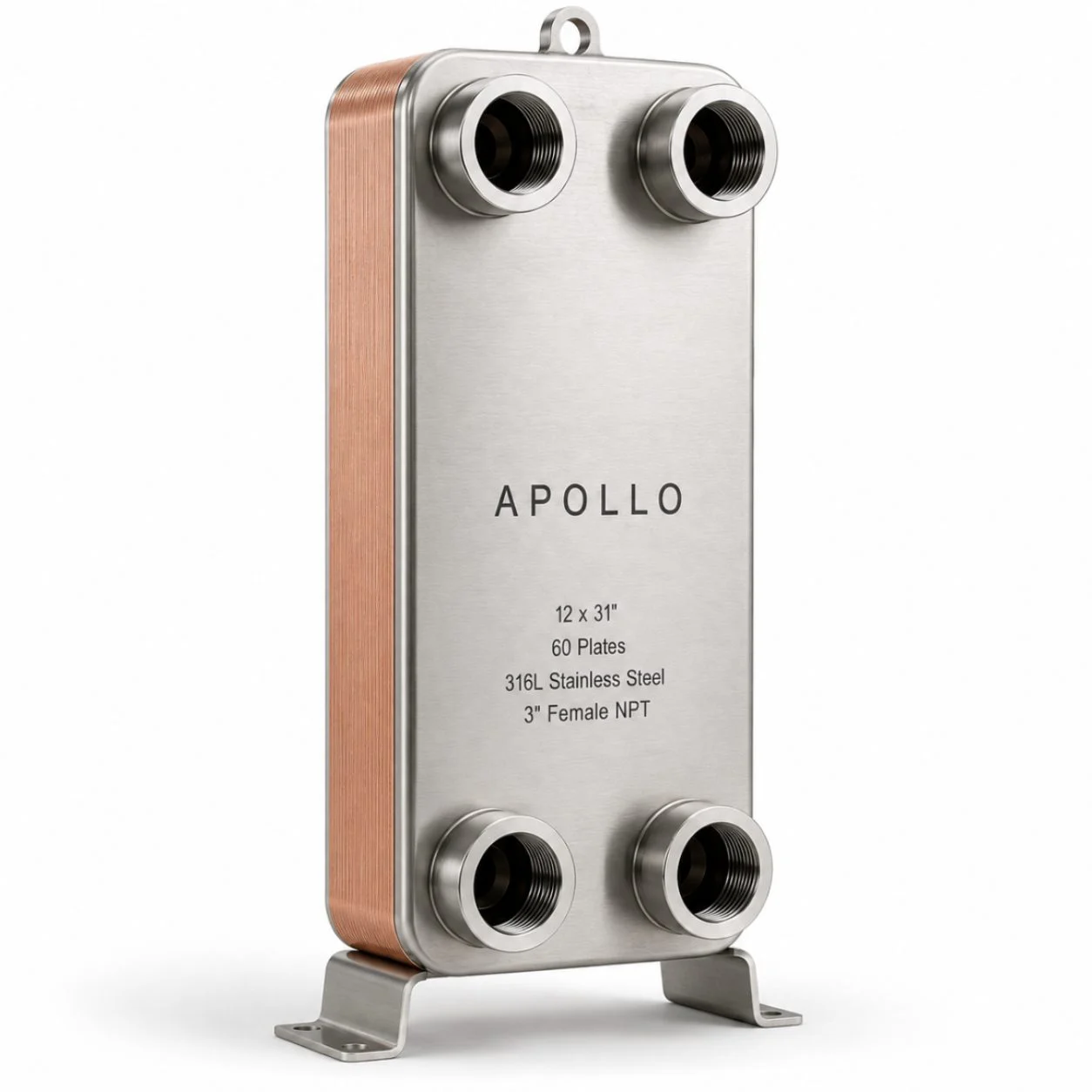
Brazed Plate Heat Exchanger
For heat pumps, boilers, chillers, refrigeration, and general hydronic systems where two circuits need to exchange heat without mixing. Fully brazed construction has no gaskets, and the 316L stainless body uses 99.9% copper braze.
View Brazed Plate HXGeothermal Ground-Loop Alternative
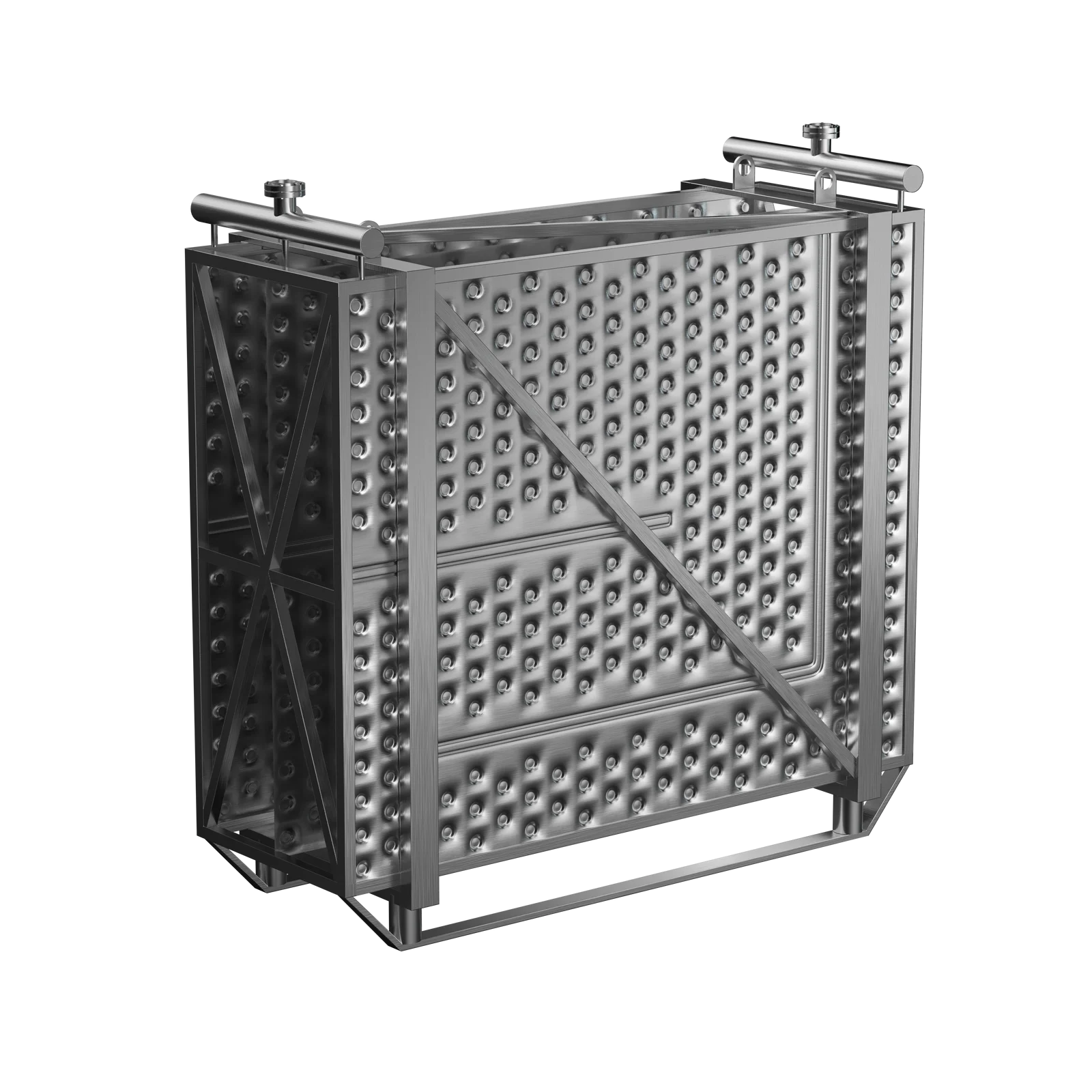
Lake Heat Exchanger
A passive, submersible heat exchanger for a lake, pond, or reservoir. It is engineered as a ground-loop alternative for compatible APOLLO 4-ton and 6-ton geothermal heat pump systems, not as a standalone product.
View Lake HXPool / Spa Heating
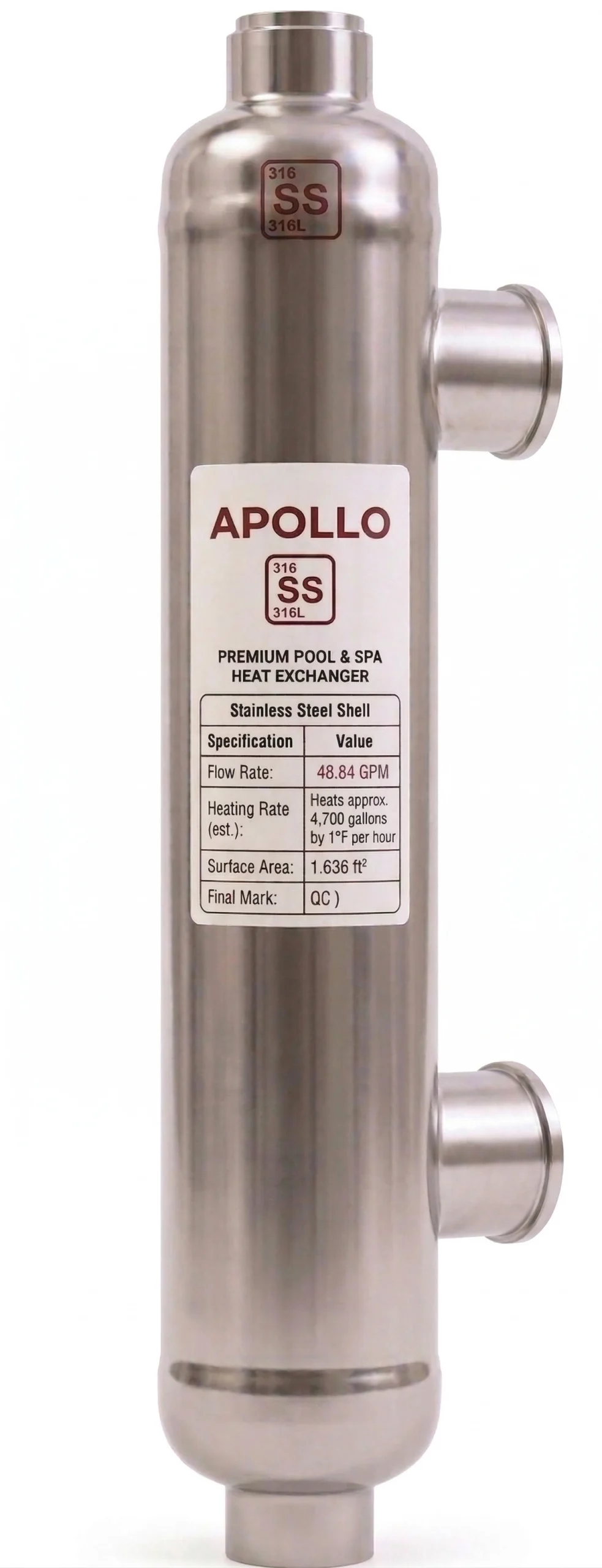
Pool and Spa Heat Exchanger
Transfers heat from a separate boiler or heat-pump loop into pool or spa water. Select Stainless 316L for chlorinated water or Titanium for saltwater and other more aggressive water chemistry.
View Pool & Spa HXNeed a complete geothermal system? Explore APOLLO Geothermal Heat Pumps to confirm the compatible 4-ton and 6-ton equipment before selecting a lake heat exchanger.
How to Choose a Heat Exchanger
Before selecting a model, gather the system details that determine heat exchanger fit:
Application
Identify whether the exchanger serves a hydronic, HVAC, geothermal, refrigeration, pool, or spa system.
Heat source and circuits
Confirm what each side of the exchanger carries and whether the heat source is a boiler, heat pump, chiller, or another loop.
Capacity and flow
Match the required heat-transfer duty, flow rate, operating pressure, and available connection sizes.
Materials and fluid compatibility
For pool and spa systems, match Stainless 316L or Titanium to the water chemistry. For refrigeration or other fluids, confirm compatibility before ordering.
The Pool Heat Pump Calculator sizes the pool heat pump itself, not the heat exchanger. For project-specific exchanger sizing or installation questions, contact MBTEK.
Heat Exchanger FAQ
Heat Exchangers — Frequently Asked Questions
Direct answers about HVAC heat exchangers, water-to-water transfer, applications, materials, sizing, and documentation.
What is a heat exchanger?
A heat exchanger transfers thermal energy between two fluids or fluid circuits without allowing them to mix. In HVAC and hydronic systems, it can transfer heat between water, glycol, air, or refrigerant circuits.
How does a heat exchanger work in HVAC?
One fluid or circuit passes through one side of the exchanger while a separate fluid or circuit passes through the other. Heat moves through the exchanger surface from the warmer side to the cooler side while the fluids remain separated.
What is the difference between a condenser and a heat exchanger?
A condenser is a specialized type of heat exchanger. It removes heat from a vapor until the vapor condenses into a liquid, while heat exchangers more broadly transfer thermal energy between fluids or circuits without requiring a phase change.
How does a refrigerant-to-water heat exchanger work?
A refrigerant-to-water heat exchanger transfers heat between a refrigerant circuit and a water circuit without allowing the fluids to mix. The APOLLO Brazed Plate Heat Exchanger is documented for heat pump, chiller, refrigeration, and hydronic applications; confirm refrigerant, pressure, temperature, flow, and material compatibility with a specialist.
Which heat exchanger is right for a pool or spa?
The APOLLO Pool and Spa Heat Exchanger is designed to transfer heat from a separate boiler or heat-pump loop into pool or spa water. It is available in capacity tiers from 55 to 2,400 KBTU and should be selected by capacity and water chemistry.
Should I choose stainless steel or titanium?
Choose Stainless 316L for chlorinated pools. Choose Titanium for saltwater pools, saltwater spas, or other more aggressive water chemistry. Confirm the material against the actual water-treatment conditions.
Can the Lake Heat Exchanger replace a drilled ground loop?
The APOLLO Lake Heat Exchanger is designed as a passive, submersible ground-loop alternative for a lake, pond, or reservoir. It is engineered for compatible APOLLO 4-ton and 6-ton geothermal heat pump systems and is not a standalone product.
How do I size a heat exchanger?
Sizing depends on the application heat load, fluids, flow rate, operating pressure and temperature, connection size, and material requirements. The Brazed Plate model uses port size and plate count, the Lake model is a fixed design, and the Pool and Spa model uses capacity tiers. A specialist should confirm the final selection.
Do these heat exchangers include manuals?
No published manual is currently available for the three heat exchangers in this collection. Contact an MBTEK specialist for installation, compatibility, and sizing questions before ordering.