
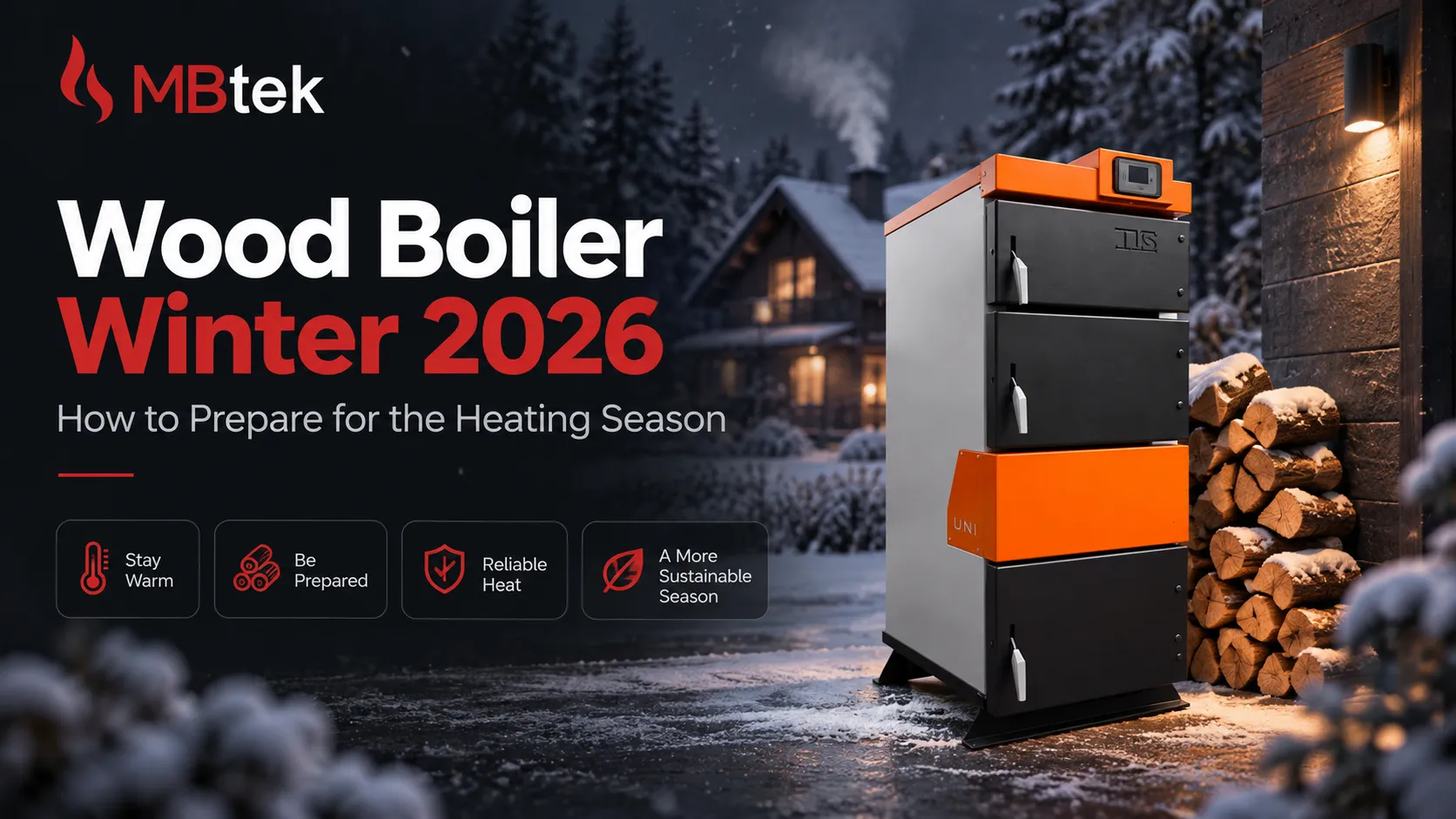
Winter is when a wood boiler earns its keep. When temperatures stay below freezing for days at a time, the difference between a properly sized, well-maintained wood boiler system and a poorly prepared one becomes obvious.
For the 2026–2027 heating season, preparing early matters. Your firewood needs to be dry, the boiler and chimney need to be clean, pumps and controls need to work correctly, and the system needs enough capacity to meet the building's actual winter heat load.
Whether you already heat with wood or are considering installing a wood boiler for winter 2026, this guide covers the most important things to check before cold weather arrives.
Why Wood Boilers Remain a Practical Winter Heating Option
Unlike a wood stove, which mainly heats the room around it, a wood boiler heats water and distributes that heat through a hydronic system.
That hot water can supply:
- Radiant floor heating
- Baseboard radiators
- Panel radiators
- Fan coils or air handlers
- Domestic hot water tanks
- Multiple buildings or heating zones
This makes wood boilers particularly useful for larger homes, workshops, farms, garages, and commercial buildings where heating one room with a stove is not enough.
Modern wood gasification boilers also differ significantly from older conventional wood-burning equipment. Gasification uses a controlled secondary combustion stage to extract more heat from the gases produced by the burning wood rather than allowing much of that energy to escape through the chimney.
For example, MBTEK's UNI wood boiler range is rated at 86%+ efficiency, while the TITAN Lambda line reaches up to 95% efficiency with automatic ignition and oxygen-sensor combustion control.
Wood Boiler Winter 2026 Checklist
Before the first serious cold spell, inspect the entire heating system rather than concentrating only on the boiler.
| What to Check Before Winter | |
|---|---|
| Firewood | Dry, seasoned, and protected from rain |
| Boiler | Clean combustion chamber and heat exchanger |
| Chimney | Inspect draft, deposits, and blockages |
| Pumps | Verify circulation and unusual noise |
| Expansion tank | Check pressure and condition |
| Controls | Test thermostat, aquastat, and controller |
| Valves | Confirm correct operation |
| Piping | Inspect for leaks and damaged insulation |
| Backup heat | Test before it is actually needed |
| Smoke/CO alarms | Test and replace batteries if necessary |
- Firewood
- What to Check Before Winter
- Dry, seasoned, and protected from rain
- Boiler
- What to Check Before Winter
- Clean combustion chamber and heat exchanger
- Chimney
- What to Check Before Winter
- Inspect draft, deposits, and blockages
- Pumps
- What to Check Before Winter
- Verify circulation and unusual noise
- Expansion tank
- What to Check Before Winter
- Check pressure and condition
- Controls
- What to Check Before Winter
- Test thermostat, aquastat, and controller
- Valves
- What to Check Before Winter
- Confirm correct operation
- Piping
- What to Check Before Winter
- Inspect for leaks and damaged insulation
- Backup heat
- What to Check Before Winter
- Test before it is actually needed
- Smoke/CO alarms
- What to Check Before Winter
- Test and replace batteries if necessary
A system that appears to operate normally during mild fall weather can behave very differently once it runs continuously during a January cold spell.
Start With Your Firewood: Moisture Matters
One of the easiest ways to improve wood boiler performance has nothing to do with the boiler itself.
Burn dry wood.
EPA guidance recommends wood with a moisture content of less than 20%. Wet wood wastes part of the available energy evaporating water, lowers combustion temperature, and can increase smoke and creosote formation.
Use a basic moisture meter rather than guessing from the appearance of the logs.
For best results:
- Split wood before seasoning it.
- Store it off the ground.
- Protect the top from rain and snow.
- Leave the sides open enough for airflow.
- Measure moisture on a freshly split face of the log.
EPA guidance historically recommended at least six months of seasoning for many softwoods and approximately 12 months for hardwoods. Actual drying time varies considerably with climate, log size, and storage conditions.
If you are preparing for winter 2026, the wood you plan to burn during the coldest months should ideally already be stacked and drying well before winter begins.
Clean the Boiler Before Peak Heating Season
Ash and deposits act as insulation in places where you do not want insulation.
A layer of buildup on heat-transfer surfaces can reduce the boiler's ability to transfer combustion heat into the water. Before winter, inspect and clean the areas specified in your boiler's maintenance instructions.
Important areas can include:
- Combustion chamber
- Gasification nozzle or secondary chamber
- Heat exchanger surfaces
- Flue passages
- Ash collection areas
- Door seals and gaskets
The chimney should also be inspected periodically. Poor draft, creosote accumulation, or a partially blocked flue can affect combustion and create a safety hazard.
Routine maintenance is especially important with wood equipment because fuel quality and operating habits directly affect how quickly deposits accumulate.
Do Not Ignore Return-Water Temperature
A wood boiler is not simply a firebox connected to some pipes.
Hydronic system design matters.
One particularly important part of many wood boiler installations is return-temperature protection. Water returning to the boiler at excessively low temperatures can cool internal surfaces enough for flue gases to condense.
That condensation can contribute to creosote formation and corrosion.
MBTEK's installation guidance recommends keeping return water at roughly 130°F / 55°C or higher, depending on the system and boiler requirements.
A mixing valve, loading unit, or boiler protection station can be used to maintain the appropriate return temperature while the heating system circulates water through the building.
Thermal Storage Can Make Wood Heating Easier
Thermal storage is common in well-designed wood boiler systems because the boiler may produce more heat during a firing cycle than the building needs at that exact moment.
That is particularly useful with cordwood boilers because wood combustion is not perfectly variable like an electric resistance heater or modulating gas appliance.
Instead of repeatedly restricting the fire to match a small heating demand, a properly designed system can allow the boiler to operate efficiently while storing heat for later use.
This can provide several benefits:
- Longer periods between firings
- More stable hydronic temperatures
- Better operation during mild weather
- Reduced cycling
- More flexibility between boiler output and building demand
Thermal storage is therefore worth considering when planning a new wood gasification system, although the correct tank capacity depends on the boiler, building load, and desired operating strategy.
What Size Wood Boiler Do You Need for Winter?
One of the biggest mistakes is selecting a boiler based only on square footage.
A 3,000 ft² modern, well-insulated home does not have the same heating requirement as a poorly insulated 3,000 ft² farmhouse in a much colder climate.
A proper heat-loss calculation should consider factors such as:
- Building size
- Insulation
- Windows and doors
- Air leakage
- Local design temperature
- Ceiling height
- Desired indoor temperature
- Domestic hot-water demand
- Additional buildings or heating zones
Approximate heating-area figures are useful for narrowing your options, but they should not replace final system sizing.
For reference, the current MBTEK residential and light-commercial wood boiler range includes:
| Output | Approx. Heating Area | |
|---|---|---|
| PRO 11 | 55,000 BTU | Up to 1,500 ft² |
| UNI 15 | 65,000 BTU | Up to 2,500 ft² |
| PRO 30 | 105,000 BTU | Up to 3,000 ft² |
| UNI 40 | 130,000 BTU | Up to 4,000 ft² |
| UNI 60 | 200,000 BTU | Up to 5,000 ft² |
| UNI 95 | 330,000 BTU | Up to 8,000 ft² |
- PRO 11
- Output
- 55,000 BTU
- Approx. Heating Area
- Up to 1,500 ft²
- UNI 15
- Output
- 65,000 BTU
- Approx. Heating Area
- Up to 2,500 ft²
- PRO 30
- Output
- 105,000 BTU
- Approx. Heating Area
- Up to 3,000 ft²
- UNI 40
- Output
- 130,000 BTU
- Approx. Heating Area
- Up to 4,000 ft²
- UNI 60
- Output
- 200,000 BTU
- Approx. Heating Area
- Up to 5,000 ft²
- UNI 95
- Output
- 330,000 BTU
- Approx. Heating Area
- Up to 8,000 ft²
Larger UNI Industrial boilers extend from 500,000 BTU to 3.4 million BTU for farms, large workshops, commercial buildings, and other high-demand applications. Final sizing should always be confirmed from the actual heating load.
A 2026 Change: Do Not Assume the Federal Biomass Tax Credit Still Applies
If you have researched wood boilers previously, you may have seen references to a U.S. federal tax credit covering qualifying biomass boilers.
That information is now outdated for new 2026 installations. The IRS says the Energy Efficient Home Improvement Credit applies to qualifying property placed in service before December 31, 2025, including the former annual limit for qualifying biomass stoves and boilers.
State, utility, or local incentives may still exist, so homeowners should check programs available where the system will actually be installed rather than relying on older articles describing the former federal incentive.
Should You Install a Wood Boiler Before Winter 2026?
A wood boiler can make particular sense when you have access to affordable firewood and want to heat an entire hydronic system rather than a single room.
It is especially worth considering for:
- Rural properties with accessible firewood
- Large homes with hydronic heating
- Workshops and garages
- Farms and agricultural buildings
- Properties currently dependent on expensive delivered fuels
- Owners who want greater control over their heating fuel supply
But buying the boiler is only part of the project.
Chimney design, pumps, controls, return protection, thermal storage, hydronic distribution, and installation all affect how the system performs once winter arrives.
That is why the best time to plan a wood boiler system is before the temperature drops.
For winter 2026, start by calculating your building's heat requirement, checking your existing hydronic system and fuel supply, and choosing the boiler around the complete installation rather than BTU output alone.
A properly sized wood boiler supplied with dry firewood and supported by a well-designed hydronic system can provide dependable central heating throughout the coldest months — without making winter heating more complicated than it needs to be.


