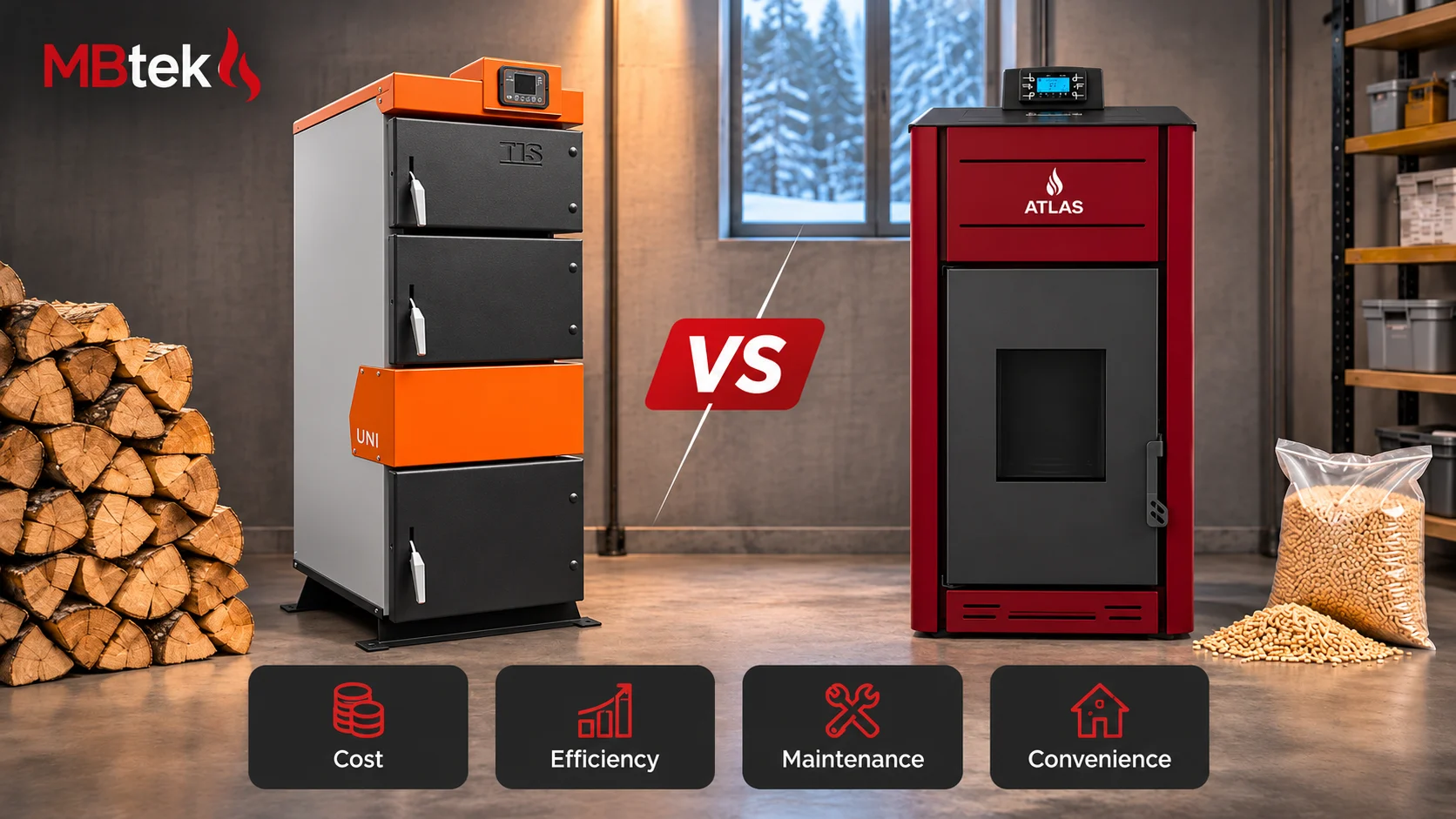
Choosing between a wood boiler and a pellet boiler comes down to one question: do you want to save money on fuel, or save time on daily work? Both burn biomass to heat water for radiant floors, radiators, fan coils and domestic hot water. They differ in what you feed them and how much attention they need.
This guide compares cost, efficiency, maintenance and fuel storage, using real MBTEK models, so you can pick the right one for your home, shop or farm.
Wood boiler vs pellet boiler: side-by-side
| Wood boiler | Pellet boiler | |
|---|---|---|
| Fuel | Firewood logs | Compressed wood pellets |
| Fuel loading | Manual, every burn | Automatic from a hopper |
| Equipment price | Lower at the simple end, such as PRO | Higher for most automatic models |
| Fuel cost | Often lowest, especially with cheap or free wood | Depends on local pellet prices |
| Daily attention | Load logs, manage burns | Refill the hopper every few days |
| Storage | Covered space to season logs | Dry space for bagged or bulk pellets |
| Thermal storage | Strongly recommended | Helpful, depends on the system |
| Best for | Hands-on owners with cheap wood | Convenience and steady automatic heat |
- Fuel
- Wood boiler
- Firewood logs
- Pellet boiler
- Compressed wood pellets
- Fuel loading
- Wood boiler
- Manual, every burn
- Pellet boiler
- Automatic from a hopper
- Equipment price
- Wood boiler
- Lower at the simple end, such as PRO
- Pellet boiler
- Higher for most automatic models
- Fuel cost
- Wood boiler
- Often lowest, especially with cheap or free wood
- Pellet boiler
- Depends on local pellet prices
- Daily attention
- Wood boiler
- Load logs, manage burns
- Pellet boiler
- Refill the hopper every few days
- Storage
- Wood boiler
- Covered space to season logs
- Pellet boiler
- Dry space for bagged or bulk pellets
- Thermal storage
- Wood boiler
- Strongly recommended
- Pellet boiler
- Helpful, depends on the system
- Best for
- Wood boiler
- Hands-on owners with cheap wood
- Pellet boiler
- Convenience and steady automatic heat
The boiler price is only part of the picture. A complete system also needs a chimney, pumps, controls, boiler protection and usually a buffer tank, so compare installed cost, not just the unit.
Equipment cost: wood vs pellet
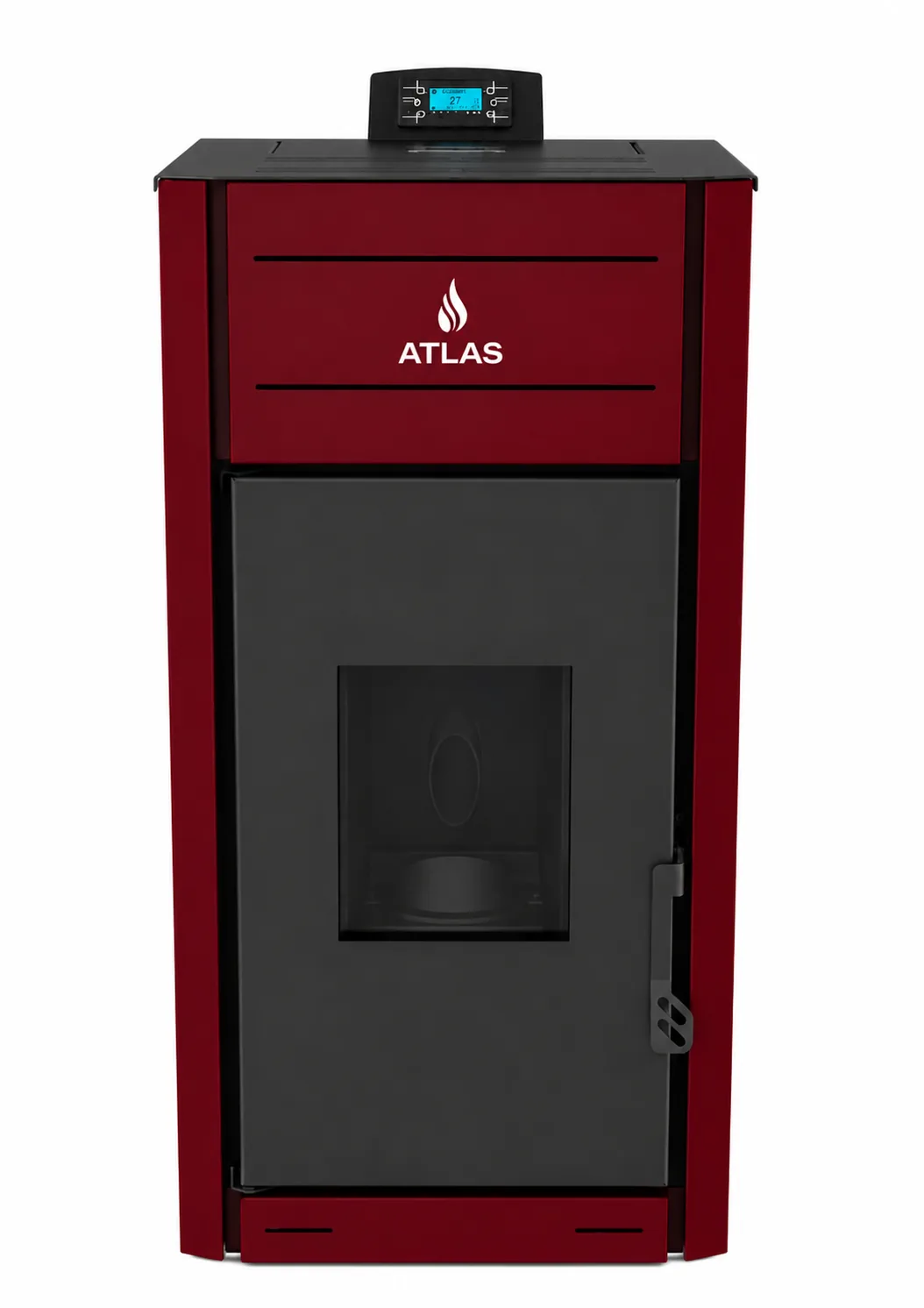
Wood boilers cost less at the simple end. The PRO series is manual-feed and designed to run without electricity. UNI adds gasification and a smart controller, and TITAN Lambda adds automatic ignition and oxygen-sensor control. Pellet boilers add a hopper, feed system and electronic controls, which usually raises the price. The compact ATLAS is the exception: it is a pellet boiler priced below the UNI line. Take a look at the models below and check current pricing on each product page.
Check our wood boilers
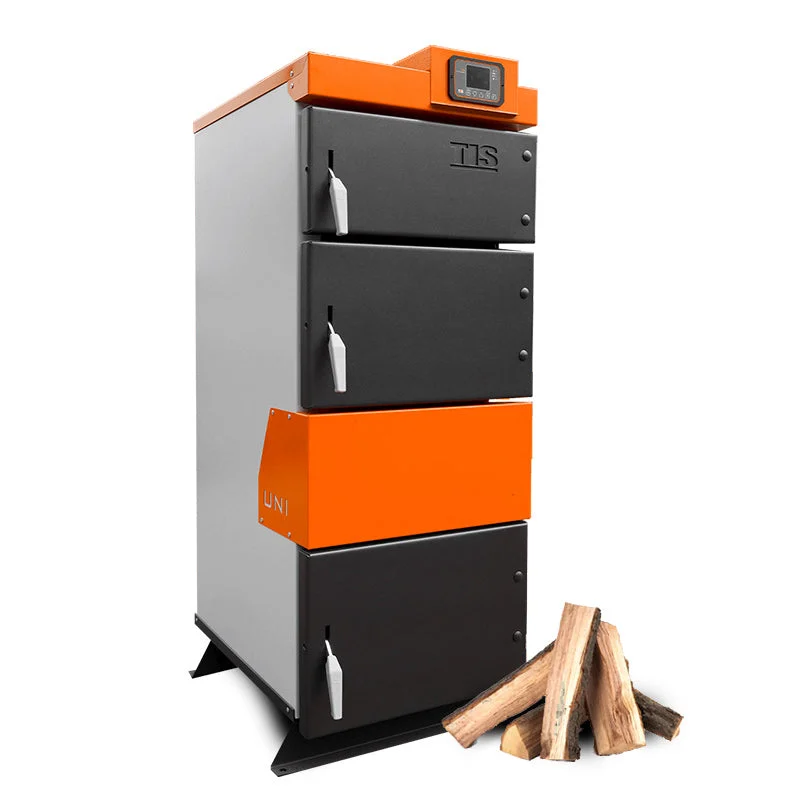 UNI 15 wood boiler, 65K BTUView product
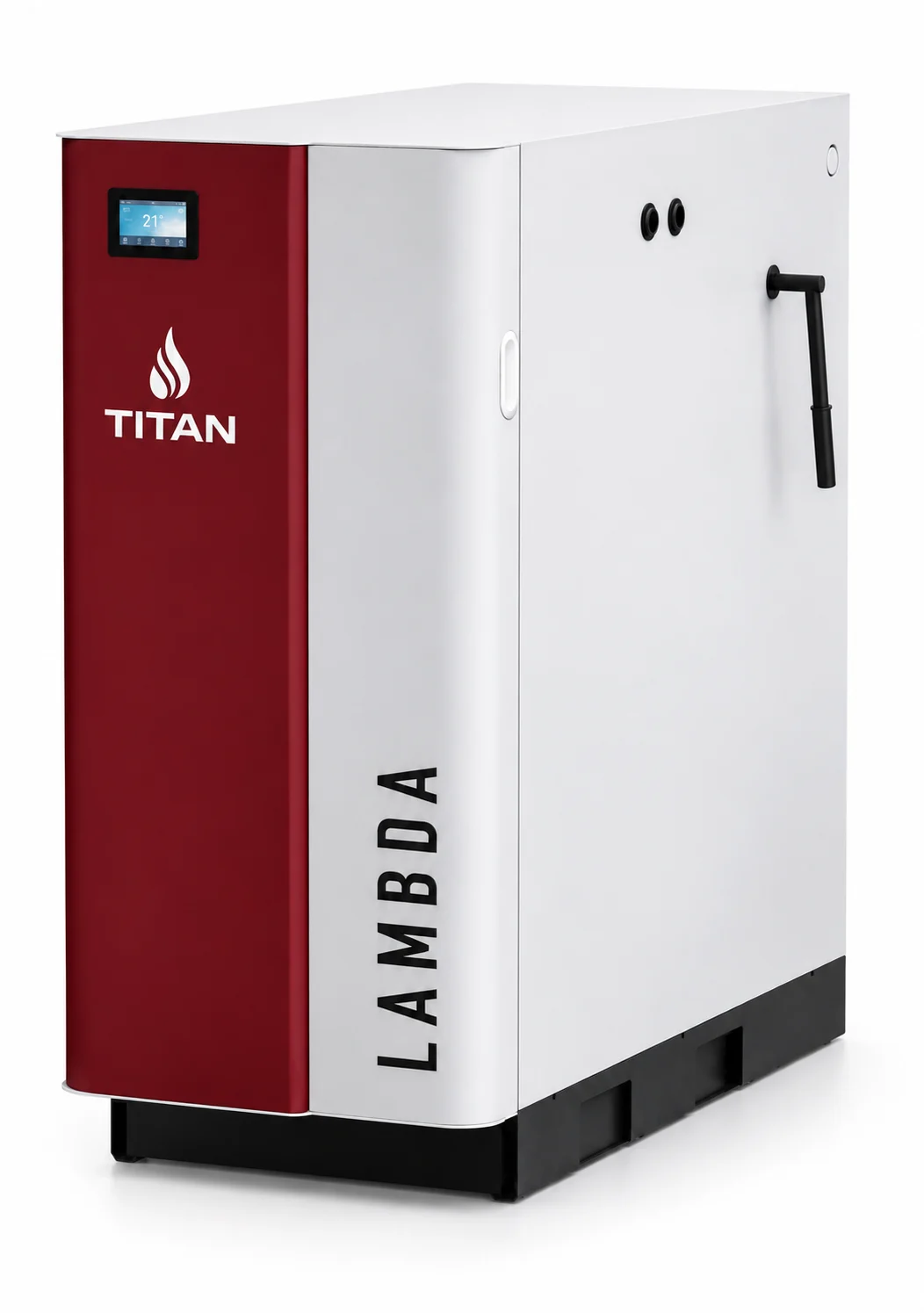 TITAN Lambda Wood Gasification Boiler, 110K-175K BTUView product
Check our pellet boilers
Check all pellet boilers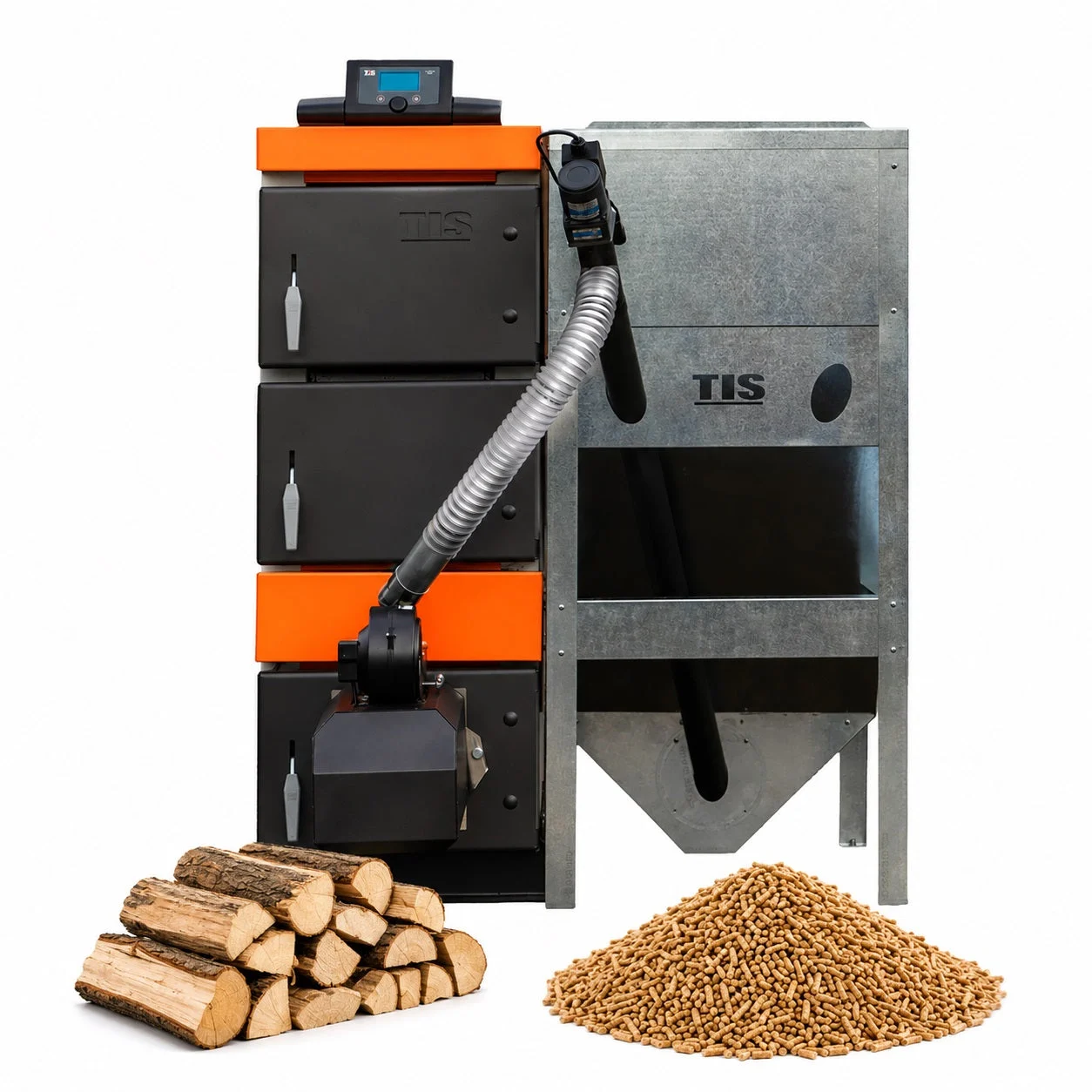
Fuel cost: which is cheaper to run?
Cords and tons are not comparable until you convert them to the same unit: the cost per million BTU of useful heat. Penn State Extension lists about 24 million BTU per cord of firewood and 8,200 BTU per pound of pellets. Here is the math for two modern boilers at example prices:
| Wood boiler | Pellet boiler | |
|---|---|---|
| Example fuel price | $300 per cord | $350 per ton |
| Fuel energy | 24 million BTU per cord | 16.4 million BTU per ton |
| Assumed boiler efficiency | 86% | 92% |
| Useful heat per unit | 20.6 million BTU | 15.1 million BTU |
| Cost per million BTU | $14.53 | $23.20 |
- Example fuel price
- Wood boiler
- $300 per cord
- Pellet boiler
- $350 per ton
- Fuel energy
- Wood boiler
- 24 million BTU per cord
- Pellet boiler
- 16.4 million BTU per ton
- Assumed boiler efficiency
- Wood boiler
- 86%
- Pellet boiler
- 92%
- Useful heat per unit
- Wood boiler
- 20.6 million BTU
- Pellet boiler
- 15.1 million BTU
- Cost per million BTU
- Wood boiler
- $14.53
- Pellet boiler
- $23.20
For 60 million BTU of useful heat in a winter, that is about $872 in firewood versus $1,392 in pellets. These are illustrative numbers, not quotes. Change the prices and the answer changes:
| Wood boiler | Pellet boiler | |
|---|---|---|
| $300 per cord, $350 per ton | $14.53 | $23.20 |
| $500 per cord, $350 per ton | $24.22 | $23.20 |
| $300 per cord, $250 per ton | $14.53 | $16.57 |
- $300 per cord, $350 per ton
- Wood boiler
- $14.53
- Pellet boiler
- $23.20
- $500 per cord, $350 per ton
- Wood boiler
- $24.22
- Pellet boiler
- $23.20
- $300 per cord, $250 per ton
- Wood boiler
- $14.53
- Pellet boiler
- $16.57
Wood wins clearly when firewood is cheap or free. Where firewood is expensive or pellets are cheap, the two cost about the same. Get local quotes for both before deciding. To estimate how much wood your home would actually burn, see how much wood a wood boiler uses.
Efficiency: closer than most people expect
Modern boilers of both types are efficient, so efficiency rarely settles the question. Rated figures on MBTEK product pages include 86% for PRO, up to 95% for TITAN Lambda, over 94% for ATLAS, up to 96% for PHOENIX and about 90% for PELLET DUO. Your real efficiency depends on installation, fuel quality and how the system is run.
A wood gasification boiler burns firewood in two stages, which extracts more heat from dry wood than a basic design. Dry wood matters: the TITAN Lambda calls for hardwood under 20% moisture. A pellet boiler gets its consistency from the fuel itself. Pellets have uniform size and moisture, and the feed system delivers them according to demand. Its advantage is steady control, not a higher number on the label. For pellet fuel quality, see hardwood vs softwood pellets.
Maintenance and daily work
This is where most buyers decide. Both types need regular cleaning and an annual check of pumps, valves and the chimney. The daily routine is what differs:
| Wood boiler | Pellet boiler | |
|---|---|---|
| Fueling | Load seasoned logs during the season | Refill the hopper, for example about every 4 to 10 days on PELLET DUO |
| Ash | Remove ash from the firebox | Empty ash, or use self-cleaning support where fitted |
| Cleaning | Clean heat exchanger surfaces and flue | Clean burner and heat exchanger |
| Wear parts | Gaskets and refractory | Auger, igniter and feed mechanism |
| Fuel preparation | Cut, split, stack and season wood | None, but keep pellets dry |
- Fueling
- Wood boiler
- Load seasoned logs during the season
- Pellet boiler
- Refill the hopper, for example about every 4 to 10 days on PELLET DUO
- Ash
- Wood boiler
- Remove ash from the firebox
- Pellet boiler
- Empty ash, or use self-cleaning support where fitted
- Cleaning
- Wood boiler
- Clean heat exchanger surfaces and flue
- Pellet boiler
- Clean burner and heat exchanger
- Wear parts
- Wood boiler
- Gaskets and refractory
- Pellet boiler
- Auger, igniter and feed mechanism
- Fuel preparation
- Wood boiler
- Cut, split, stack and season wood
- Pellet boiler
- None, but keep pellets dry
A thermal storage tank helps wood boilers by holding the heat from a full burn, so the house stays comfortable between loads. Read more about why biomass boilers need a buffer tank.
Power outages and fuel storage
Pellet boilers need electricity for the controls and feed system. Most wood boilers need it for circulation pumps and safety controls too. The PRO series is the exception: it is designed to run without electricity, which makes it a good fit for off-grid cabins and shops. Check the whole system design, because pumps and controls elsewhere in the loop may still need power.
For storage, firewood needs covered space and time to season. Pellets arrive dry but must stay dry, because wet pellets swell and can jam a feed system.
Can one boiler burn both wood and pellets?
Yes, if it is built for both. The residential PELLET DUO models (20, 50 and 95) feed pellets automatically and also have a separate manual firebox for logs, which is useful as a backup or when firewood is cheap. Only burn fuels approved for your exact model.
Which should you choose?
Choose a wood boiler if:
- you have, or can buy, firewood at a good price;
- you are comfortable loading the boiler and managing wood storage;
- you want the lowest fuel cost or a simple, off-grid system.
Choose a pellet boiler if:
- you want automatic heat with little daily work;
- reliable pellet delivery is available near you;
- you do not want to cut, split and season wood.
Bottom line
A wood boiler is usually the cheaper way to heat when firewood is inexpensive and you do not mind the work. A pellet boiler is the easier way to heat. Efficiency is close, so the decision is really about fuel prices in your area and how much time you want to spend. Before buying either, get a heat-loss calculation and compare the full installed cost, not just the boiler price.
Common questions
Frequently asked questions
Is a wood boiler cheaper than a pellet boiler?+
Often, yes. Simple wood boilers cost less to buy, and firewood is usually the cheaper fuel per million BTU. But if firewood is expensive or pellets are cheap in your area, the running costs can be about equal. Compare local fuel prices per million BTU of useful heat.
Which is more efficient, a wood boiler or a pellet boiler?+
Both can be highly efficient. MBTEK lists rated efficiencies from 86% for PRO to up to 95% for TITAN Lambda on the wood side, and about 90% to 96% on the pellet side. Actual efficiency depends on installation, fuel quality and operation.
Do pellet boilers need electricity?+
Yes. Pellet boilers need power for controls and the feed system, so plan a backup if outages are common. The MBTEK PRO wood boiler is designed to run without electricity.
Can a boiler burn both wood and pellets?+
Some can. The PELLET DUO 20, 50 and 95 feed pellets automatically and also have a manual firebox for logs. Only burn fuels approved for your exact model.
Do wood and pellet boilers need a buffer tank?+
Wood boilers benefit most, because a full burn can produce more heat than the house needs at that moment. Pellet boilers can also use one, depending on the system design and boiler output.